
Roof Repair Bellevue
Roof repair Bellevue homeowners can trust. We trace the leak to its source, fix it properly and tell you honestly whether the rest of the roof has years left.
Roof Repair Bellevue Homeowners Can Count On
A leak rarely starts where the stain shows up. Water gets in at one spot, runs along the underlayment or a rafter, and drips somewhere else. Good roof repair Bellevue work starts by finding where the water is actually getting in. Otherwise you pay for a patch and the stain comes back with the next storm.
Bellevue averages about 36 inches of rain a year, and most of it falls from October through April. That long, wet season is hard on flashing, vents and shingles, and it is why small problems on the Eastside turn into bigger ones quickly. A small leak left alone for one winter can soak insulation, stain drywall and rot the roof deck.
We repair asphalt shingle, metal and low slope roofs on homes across Bellevue. Every visit ends with a clear answer: what failed, what we fixed or will fix, and whether the rest of the roof has years left.
Common Roof Problems We Fix in Bellevue
These are the repairs we make most often on Eastside homes.
Flashing failures
Flashing seals the joints where the roof meets walls, chimneys, skylights and valleys. When it rusts, lifts or was installed poorly, water gets in at the seam. Flashing is the most common source of leaks we trace.
Pipe boots and vents
Rubber pipe boots crack in the sun and let water run down the vent pipe into the attic. Replacing a failed boot is a quick, low cost roof repair Bellevue homeowners often put off longer than they should.
Missing, cracked or lifted shingles
Wind storms tear off shingles, and moss can lift shingle edges. We replace damaged shingles and match them as closely as the available product allows.
Valley leaks
Valleys carry more water than any other part of the roof and collect needles and leaves. Worn or clogged valleys are a frequent winter leak.
Skylight leaks
Many skylight leaks are flashing problems, not glass problems. We reflash skylights or replace the unit if the seal has failed.
Gutter and edge damage
Overflowing gutters can push water back under the roof edge and rot the fascia and decking. We repair the edge and the roof above it.
Every roof repair Bellevue visit ends the same way: photos of what failed, a written price and a straight answer about how much life the roof has left. That is how roof repair Bellevue homeowners can plan with confidence.
Signs You Need a Roof Repair
Call for an inspection if you notice any of these:
- Water stains on ceilings or around light fixtures, especially after heavy rain.
- Drips in the attic, damp insulation or a musty smell.
- Shingles in the yard after a windstorm.
- Daylight showing through the roof boards in the attic.
- Sagging gutters or water spilling over the roof edge.
- Thick moss with shingle edges lifting underneath.
- Granules collecting in the gutters or at the bottom of downspouts.
Catching these early keeps a roof repair small. Waiting usually means replacing wet insulation, drywall and decking as well as the roof itself.
How a Roof Repair Visit Works
Tell us what you see
Call (425) 464-4713 or use the form. Photos of stains or damage help.
Inspection
We check the roof surface, flashing, vents, valleys, gutters and, where we can reach it, the attic.
Photos and a written quote
You see the problem and the price before we start.
Repair
We fix the cause, not just the symptom, using materials that match your roof.
Check and cleanup
We confirm the repair, clean up and tell you what to watch for.
Emergency tarping
If water is coming in during a storm, the first goal is to stop it. We can tarp or make a temporary repair to protect the inside of the house, then finish the permanent repair when the roof is dry enough to seal properly.
Repair or Replace?
A good roof repair Bellevue contractor tells you when a repair is a waste of money. We look at the age of the roof, how widespread the wear is and how many repairs it has already needed.
| Usually a repair | Usually a replacement |
|---|---|
| Damage on one slope or around one feature | Worn, curling or bare shingles on every slope |
| Roof in the first half of its life | Roof near the end of its expected life |
| A single leak with a clear source | Leaks in several places, or leaks that keep moving |
| Solid decking | Soft or rotted decking across a large area |
If replacement makes more sense, our Bellevue roof replacement page explains how a full tear-off works and what affects the price.
We give you the honest answer either way. A repair that buys you five good years is often the right call.
Storm Damage and Insurance
Windstorms are the most common cause of sudden roof damage on the Eastside. After a storm, look for missing shingles, creased shingles, damaged ridge caps and debris on the roof.
Whether insurance covers the repair depends on your policy and the cause. Sudden storm damage is often treated differently from age and wear. We document the damage with photos and a written description that you can share with your insurance company. If you want to start a claim, contact your insurer first and ask how they want the damage documented.
Moss, Debris and Roof Repair
Moss is everywhere on Bellevue roofs, especially under tall evergreens. It holds water against the shingles and can lift shingle edges, which lets water run underneath. Needles and leaves pile up in valleys and behind chimneys and slow down drainage.
When moss has already caused damage, we repair the lifted or broken shingles and the flashing around them. If the shingles under the moss are worn through across large areas, a new roof may be the better long term fix.
Permits and Licensing
Most roof repairs in Bellevue do not need a permit. The City of Bellevue roofing permit FAQ says a residential roof replacement or repair does not need a building permit when replaced sheathing is limited to five 4 by 8 foot sheets. Larger sheathing replacement or structural changes need a permit, which is filed through MyBuildingPermit.com.
Washington requires roofing contractors to be registered, bonded and insured. You can check any contractor on the Washington L&I Verify tool. We are licensed, bonded and insured.
Find It.
Fix It.
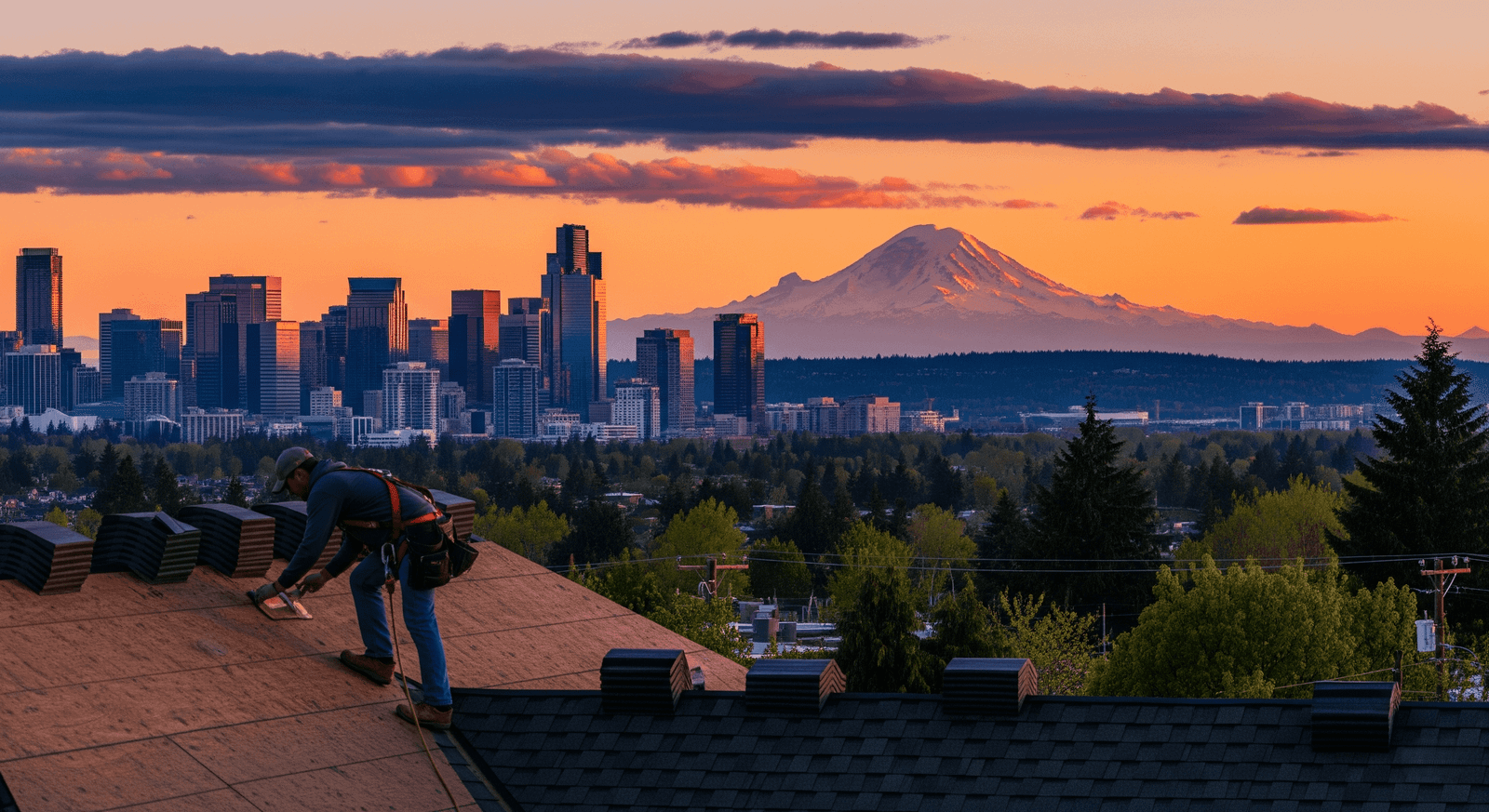
Water travels before it drips. We follow it back to where it gets in, so the repair stops the leak instead of hiding it for a season.
Get Your Free EstimateWhy Choose Us for Roof Repair Bellevue
- We trace leaks to the source instead of patching the stain.
- Photos and a written quote before any work starts.
- Repairs on asphalt shingle, metal and low slope roofs.
- Honest repair or replace advice.
- Phones answered Monday to Friday, 6am to 6pm.
Call (425) 464-4713 or book an inspection below. We repair roofs across Bellevue, Kirkland, Redmond, Mercer Island, Newcastle, Issaquah and Sammamish. Thinking about materials for the future? Read our metal roofing Bellevue guide.
Roof Repair Bellevue Costs Explained
We do not quote repairs over the phone because the cause of a leak is often somewhere other than the stain. After the inspection you get a written roof repair Bellevue price. These are the things that move it:
What failed
A pipe boot or a few shingles is a small job. Rebuilding chimney flashing or a valley is larger.
Hidden damage
Wet or rotted decking under the leak has to be replaced before the roof can be sealed.
Access and pitch
Steep or high roofs need more safety setup.
Material
Metal and low slope repairs take different materials and skills than asphalt shingles.
Matching
Older shingles may no longer be made, so we match color and profile as closely as possible.
Small repairs that prevent big ones
- Replacing cracked pipe boots before they leak.
- Resealing or replacing loose flashing at walls and chimneys.
- Clearing valleys and gutters so water drains off the roof.
- Replacing a handful of wind damaged shingles before the next storm gets under them.
Roof Repair Bellevue by Season
Fall
Leaves and needles fill gutters and valleys just as the rain starts. Fall is the best time to clear the roof and fix small issues before winter.
Winter
Most leaks show up between November and March, when rain is steady and storms push water sideways. Roof repair Bellevue calls peak in these months, so call as soon as you see a stain.
Spring
After the wet season, look for stains, damp attic insulation and missing shingles. Spring is a good time for repairs and for planning a replacement if the roof is near the end of its life.
Summer
Dry weather is ideal for larger repairs, flashing rebuilds and replacements. Book early, because summer schedules fill quickly.
Roof Repair Bellevue for Every Roof Type
We repair asphalt shingle roofs, standing seam and other metal roofs, synthetic tile and low slope membrane roofs. Each one fails in its own way. Shingles crack and lift, metal roofs leak at fasteners and flashing, and low slope roofs leak at seams and drains. Our roof repair Bellevue crews carry the right materials for each roof so the repair matches what is already there.
What to Do When You Find a Leak
Protect the inside
Move belongings, set out buckets and lay down towels or plastic.
Relieve a bulging ceiling
If water is pooling in drywall, a small hole at the lowest point lets it drain into a bucket instead of spreading.
Take photos
of the stain, the ceiling and anything damaged. These help with roof repair Bellevue diagnosis and with insurance.
Stay off the roof
Wet roofs are slippery and dangerous. Leave it to a crew with fall protection.
Call for a roof repair Bellevue inspection
so the cause is found and fixed before the next storm.
Most roof repair Bellevue visits start with exactly these steps, and they keep a small leak from becoming a ceiling, insulation and drywall repair.
Roof Repair Across Bellevue
We repair roofs in every Bellevue neighborhood and nearby Eastside cities.
Book a Roof Repair Inspection
Tell us what you are seeing, such as a stain, a drip or missing shingles. We will set up an inspection and give you a written roof repair Bellevue quote.
Request Received
We'll contact you as soon as we can to schedule your free roof inspection. Your written estimate follows the inspection.
Roof Repair Questions
It depends on what failed and how easy it is to reach. A few replaced shingles or a new pipe boot is a small job. Rebuilding flashing around a chimney or replacing rotted decking is a larger one. We inspect first and give you a written price before any work starts.
We can usually make a temporary repair or tarp the roof to stop water coming in, then complete the permanent repair when the roof is dry enough to seal properly.
Wind driven rain pushes water sideways and uphill under shingles and flashing. Leaks that only appear in storms often come from flashing, vents, skylights or worn shingles on the windward side of the roof.
Sometimes. If the damage is in one area and the rest of the roof is sound, a repair can buy several more years. If the shingles are worn out everywhere, we will show you why a replacement is the better use of your money.
Coverage depends on your policy and the cause of the damage. Sudden storm damage is often treated differently from wear. We document what we find with photos you can share with your insurer.
Yes. Moss holds water against the roof and can lift shingle edges, which lets water run underneath. We repair the damage it causes and can tell you whether the shingles around it are still sound.
Small repairs usually do not. The City of Bellevue requires a permit when more than five 4 by 8 foot sheets of sheathing are replaced or the structure changes.
Monday to Friday, 6am to 6pm. Leave a message or use the form after hours and we will call you back.
It depends on the season. In winter storms we prioritize active leaks and can usually tarp or make a temporary repair first. Call Monday to Friday, 6am to 6pm, to get on the schedule.
Yes. Our roof repair Bellevue work covers asphalt shingle, metal, synthetic tile and low slope membrane roofs.
Call (425) 464-4713, Monday to Friday 6am to 6pm, or send the form on this page with a short description and photos if you have them.
Your written quote lists exactly what we will repair and the terms that apply to that work, so you know what is covered before you approve it.